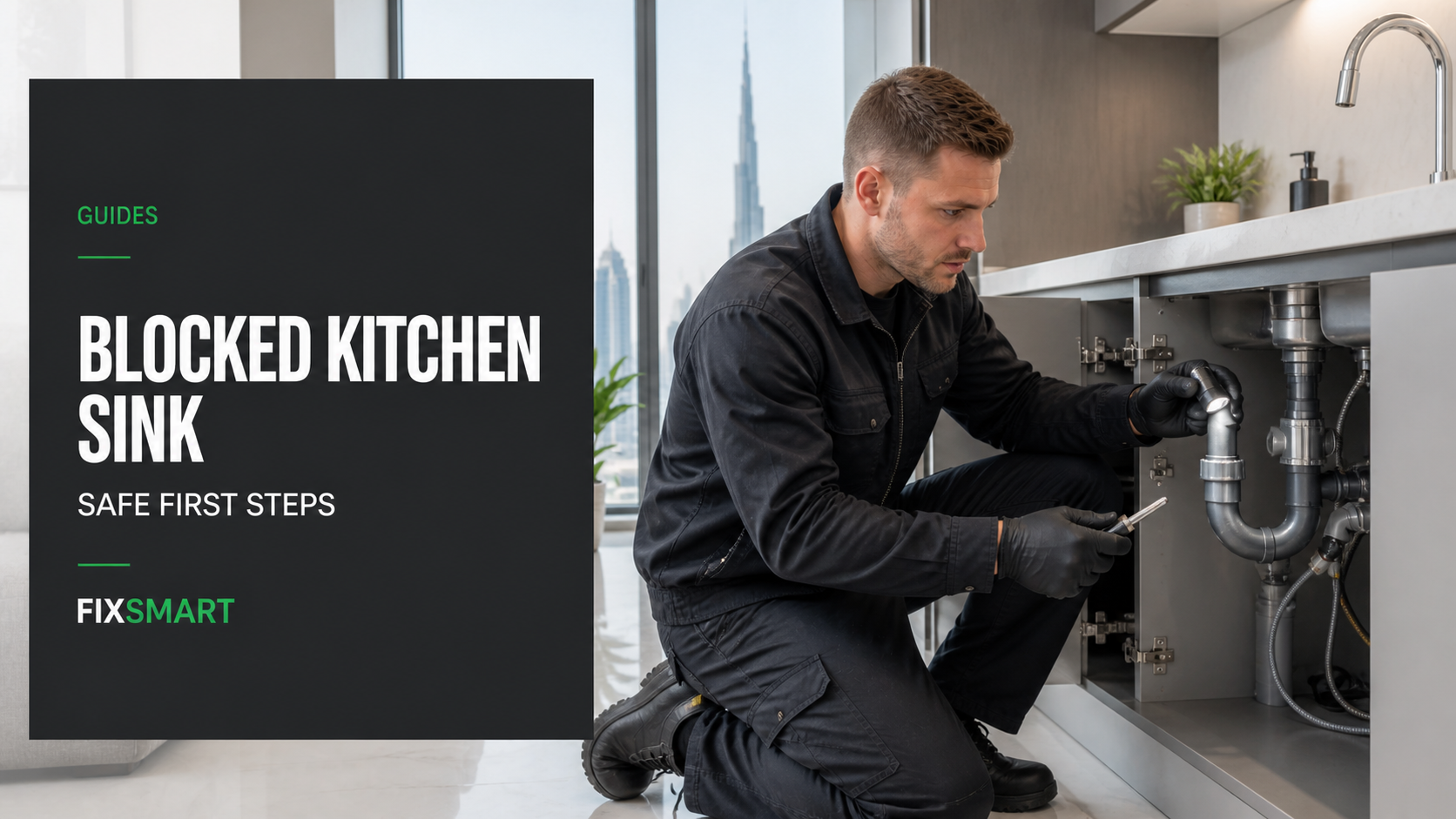
If a kitchen sink is blocked in Dubai, stop using it, remove only loose debris that is safely within reach, check whether nearby fixtures are also draining slowly and avoid mixing drain chemicals. One affected sink usually points to a local blockage; several slow or gurgling drains can indicate a shared branch, stack or building drainage problem that needs professional diagnosis.
Start with a two-minute safety check
Turn off the tap and ask everyone in the property not to use that sink. If a dishwasher discharges into the same waste line, do not run it while the sink is blocked. Move electrical appliances, extension leads and chargers away from standing water.
Look below the cabinet without touching wet electrical equipment. An active leak at a joint, swelling cabinet board or water tracking toward a socket changes the priority from a routine blockage to damage control. Isolate power only if you can do so safely from a dry location; otherwise keep clear and arrange qualified help.
Do not mix drain cleaners, bleach, acids, alkalis or improvised chemical combinations. Poison Control notes that many drain cleaners contain concentrated corrosive ingredients, while mixed household products can release harmful fumes or create dangerous reactions. Tell any attending professional exactly what has already been poured into the drain.
Is the blockage local or shared?
A short observation can make the service request much clearer. Check, without repeatedly running water, whether the following symptoms are present:
- only the kitchen sink is slow or fully blocked;
- both bowls of a double sink are affected;
- the dishwasher recently pushed water back into the sink;
- another sink, shower or floor drain is also slow;
- a drain gurgles when a different fixture is used;
- there is a sewage-type odour or wastewater returning through another opening.
If only one kitchen sink is affected, food debris, grease or a local trap or branch restriction is possible. Dubai Municipality's grease-trap guidance is written for food establishments, but it confirms the underlying infrastructure point: fats, oils and grease can accumulate and contribute to sewer blockages. At home, collect cooled cooking oil for appropriate disposal instead of sending it through the sink.
If several fixtures are affected, stop testing with more water. The restriction may be beyond the individual sink. In an apartment, contact building management because a shared stack or common-area drainage issue may require coordinated access.
Safe checks a resident can make
First remove a visible sink strainer or basket and dispose of loose food waste. Use gloves, keep your face away from the opening and do not reach into a waste disposer. If a disposer is installed, follow only its model-specific reset and clearing instructions after disconnecting power as the manufacturer requires.
You can also record how quickly the water level rises and whether it falls when no more water is added. A short video can help a plumber understand the symptom, but do not keep filling the bowl simply to demonstrate the problem.
Avoid dismantling the trap if chemicals may be present, the fittings are concealed, the cabinet is already wet or you are unsure how to reseal the assembly. A small blockage can become a cabinet leak when a compression joint is reopened or cross-threaded.
The Dubai apartment move-in inspection checklist is useful when the problem appears soon after handover: dated photos and a simple fixture test help separate a pre-existing defect from a new incident.
What not to do
Do not force wire, sharp tools or an unverified pressure device into the drain. These can damage seals, scratch fixtures or move a blockage deeper. Do not continue running the tap in the hope that a fully blocked line will clear itself. Do not treat recurring blockages as a permanent fix just because water moved once.
A chemical label may permit a specific use, but it does not confirm that the product is compatible with every pipe, disposer, seal or previous chemical. If you have already used a product, keep its container or photograph the label for the attending professional.
When the response is urgent
Arrange prompt help and limit access when wastewater is overflowing, several drains are backing up, water is close to electrical equipment, a ceiling below is becoming wet, there is a strong persistent sewage odour or the blockage returns immediately after clearing.
For a water-use anomaly that may indicate a separate supply leak, follow the DEWA high-water-usage alert case. A blocked waste pipe and a pressurised supply leak are different faults and need different tests.
What a useful plumbing visit should document
Ask the responding professional to identify the likely blockage location and explain the proposed access and clearing method before work starts. The completion record should distinguish a local trap obstruction from a branch or shared-line issue and note whether normal flow was tested afterward.
A clear quotation can cover:
- call-out and diagnostic fee;
- included clearing method and access point;
- limits if the blockage is in a shared line;
- additional approval required for camera inspection or opening finishes;
- cleanup and waste removal;
- replacement seals or parts, if needed;
- test performed before completion;
- warranty or revisit terms.
Use the FixSmart Guard verification overview when checking service profiles and documentation. For broader provider checks, review how to choose a home-service professional in Dubai.
Rental and building-management responsibilities
In a rental property, notify the landlord or property manager in writing and include the affected fixtures, time first noticed, safe photos and any immediate damage-control action. Do not authorise concealed or common-area work until the responsible party and access requirements are understood, except where urgent action is needed to prevent injury or further damage.
The Dubai rental maintenance responsibility guide explains how to organise the notice, approvals and service record. Building management should be involved early when neighbours report similar symptoms or when the suspected blockage lies in a shared stack.
Post a clear plumbing task through FixSmart
FixSmart is a Dubai service marketplace, not the company performing the plumbing work. On the FixSmart homepage, create a task with the property type, Dubai community, affected fixtures, when the symptom started, whether chemicals were used, access restrictions and safe photos. Ask responding professionals to separate diagnosis, clearing, additional investigation and reinstatement in their quotations.
The selected provider remains responsible for its assessment, work, invoice and warranty. The marketplace helps customers present the problem clearly and compare responses.
Frequently asked questions
Can I keep using the dishwasher if the sink is blocked?
Not when it discharges into the same waste connection. It may send more water into a restricted line and cause an overflow.
Does boiling water safely clear every kitchen blockage?
No. Pipe materials, seals, standing chemicals and the cause of the blockage vary. Do not assume heat is compatible with the installation.
Why are multiple drains gurgling?
It can indicate restricted airflow or flow in a shared branch, stack or building drainage line. Stop repeated testing and report all affected fixtures.
Should I open the trap myself?
Only if you understand the assembly, no hazardous product has been used and you can reseal and test it safely. Otherwise, leave it for a professional.
What information helps a plumber quote accurately?
Provide the fixture type, property type, community, symptoms, duration, other affected drains, products already used and clear access photos.
Sources and review date
Reviewed on 1 September 2026 against Dubai Municipality guidance on fats, oils, grease and sewer blockages, and Poison Control guidance on corrosive drain cleaners and mixing household products. This is general safety information, not a remote diagnosis.