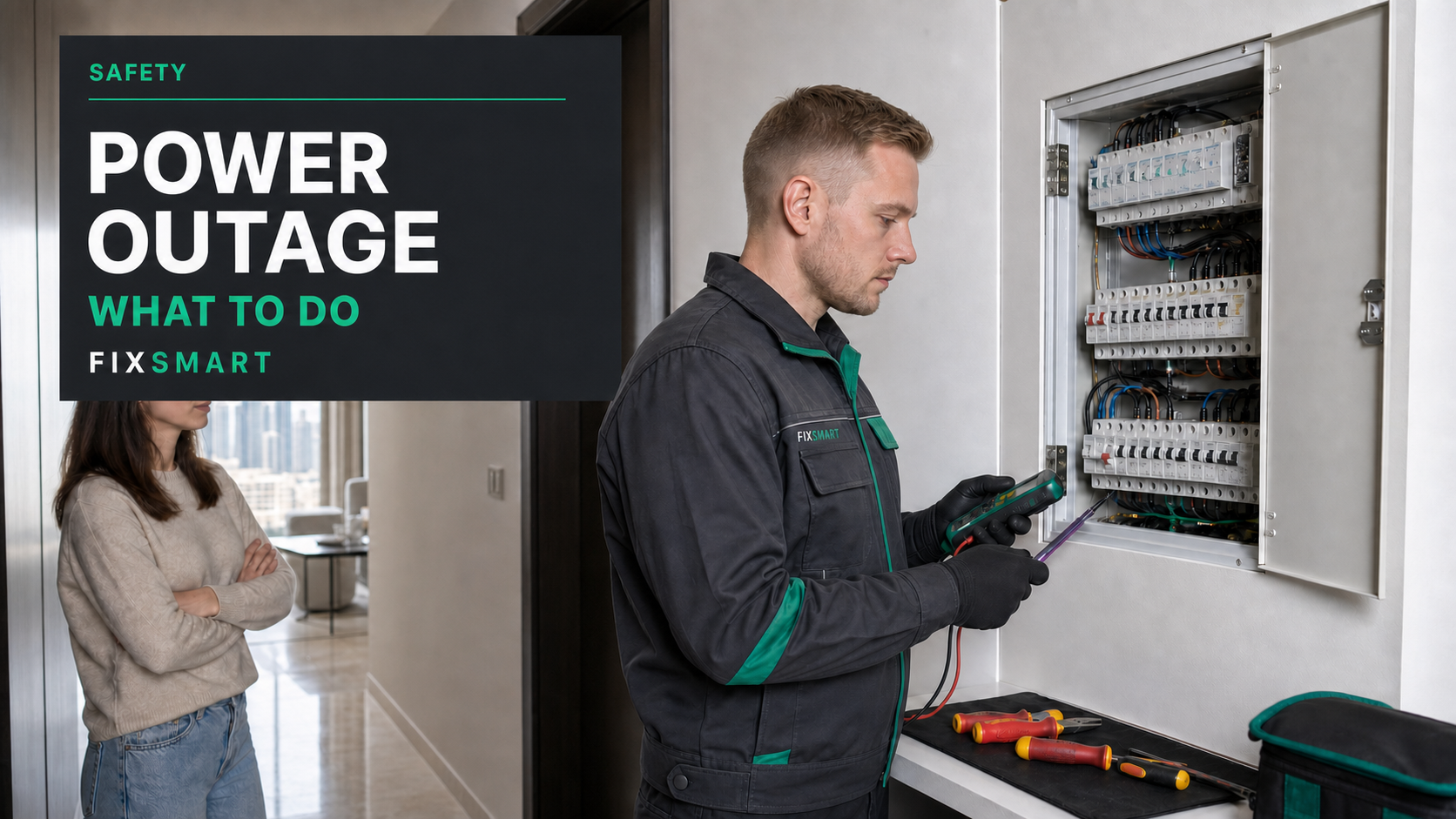
When electricity goes off, first check for fire, smoke, burning smells, water near electrical equipment or someone receiving a shock. Do not touch damaged equipment or stand in water. If there is no immediate danger, determine whether the outage affects one appliance, your property, the building or the wider area, then use the appropriate DEWA or building-management channel.
Step 1: Rule out immediate danger
Leave the affected area and contact emergency services when there is fire, smoke, active sparking or a person at risk. Do not use water on electrical equipment.
If water is close to sockets, a distribution board or powered equipment, keep away and prevent others from entering. Isolation should only be attempted when it can be done safely from a dry location by someone competent.
Step 2: Determine the scale
Look for simple evidence without opening electrical panels:
- Is one appliance off or the whole property?
- Do corridor and neighbouring lights work?
- Has building management announced a fault?
- Is the DEWA account active?
- Did the outage follow the use of a particular appliance?
- Was there a sound, smell, water leak or repeated flicker?
A building-wide issue should be reported to facilities management. A wider supply interruption belongs with DEWA. A fault limited to the property may require a qualified electrician after basic safe checks.
Step 3: Use DEWA Smart Response
DEWA provides Smart Response and official fault-reporting channels for electricity and water technical notifications. Use the DEWA app or website for the current process and status information. Provide the premise details requested through the secure channel, not in a public group.
Do not call a private electrician to work on the DEWA network. Similarly, a DEWA supply response does not replace repair of damaged internal wiring after the meter.
What to do with a breaker
A protective device may operate because of overload or a fault. Before any reset, switch off or unplug the appliance that appears connected to the event, provided it is dry and undamaged.
Do not repeatedly reset a breaker. If it trips again, will not stay on, feels hot or is associated with smell, noise or water, stop and arrange professional diagnosis. Never install a larger breaker as a shortcut.
Review extension cord and high-power appliance safety when several appliances shared one connection.
What to tell the electrician
Prepare:
- Dubai area and property type;
- whether the whole property or one circuit is affected;
- the time and activity immediately before the outage;
- which protective device operated, without removing its cover;
- visible heat, smell, sound, water or damage;
- building-management and DEWA updates;
- safe photos of the board exterior or affected socket.
The electrician can then distinguish an appliance fault, overloaded circuit, damaged connection or broader installation issue.
Internal fault or DEWA network issue
The boundary depends on the supply arrangement, meter and building systems. Report external or network problems through DEWA. Internal circuits, sockets and appliances are normally assessed by the property or an authorised private professional. In a rental, notify the landlord and review repair responsibility under a Dubai tenancy.
After power returns
Reconnect sensitive or high-demand equipment gradually. Check refrigerators, AC systems, pumps and timers. Do not immediately restart an appliance that smelled burnt, leaked or triggered protection.
For repeated flicker, hot outlets or burning smells, use the unsafe wiring warning signs.
How FixSmart helps
FixSmart is a service marketplace in Dubai. Customers can post an internal electrical task and receive responses from professionals in the relevant category. FixSmart does not replace DEWA or emergency services and does not perform the electrical diagnosis itself.
Frequently asked questions
Where should I report a normal electricity failure?
Use DEWA's current official Smart Response, app, website or contact channel, and building management when the issue appears building-wide.
Can I reset a breaker several times?
No. A repeated trip indicates a condition that requires diagnosis.
Who repairs internal wiring?
A qualified electrical professional handles internal property wiring, subject to owner and building approvals.
What if water is near a socket?
Keep away, stop others entering and arrange safe isolation and emergency assistance.
Can I replace a breaker myself?
No. Protection must match the circuit design and should be assessed by a qualified electrician.
Sources and currency
This action plan was reviewed on 6 August 2026 using DEWA Smart Response information and Dubai Civil Defence electrical-safety guidance. Use official channels for current emergency numbers and procedures.
<!-- FIXSMART_SEO_ROUTE_START -->
FIXSMART service route
Use this guide as a decision point, then continue through the relevant FIXSMART route instead of leaving the article as a dead end:
- Customer route: https://fixsmart.ae/results?q=electrical%20repair%20dubai - compare available Dubai home-service professionals for this issue.
- Cleaning route: https://fixsmart.ae/cleaning - request home, apartment or villa cleaning support when the problem involves cleaning, move-in or hygiene work.
- Professional route: https://fixsmart.ae/find-job - apply as a service provider if you want verified FIXSMART job leads.
For urgent electrical hazards, active leaks, burning smells or unsafe access work, stop using the affected area and arrange a qualified inspection before attempting DIY repair.
<!-- FIXSMART_SEO_ROUTE_END -->