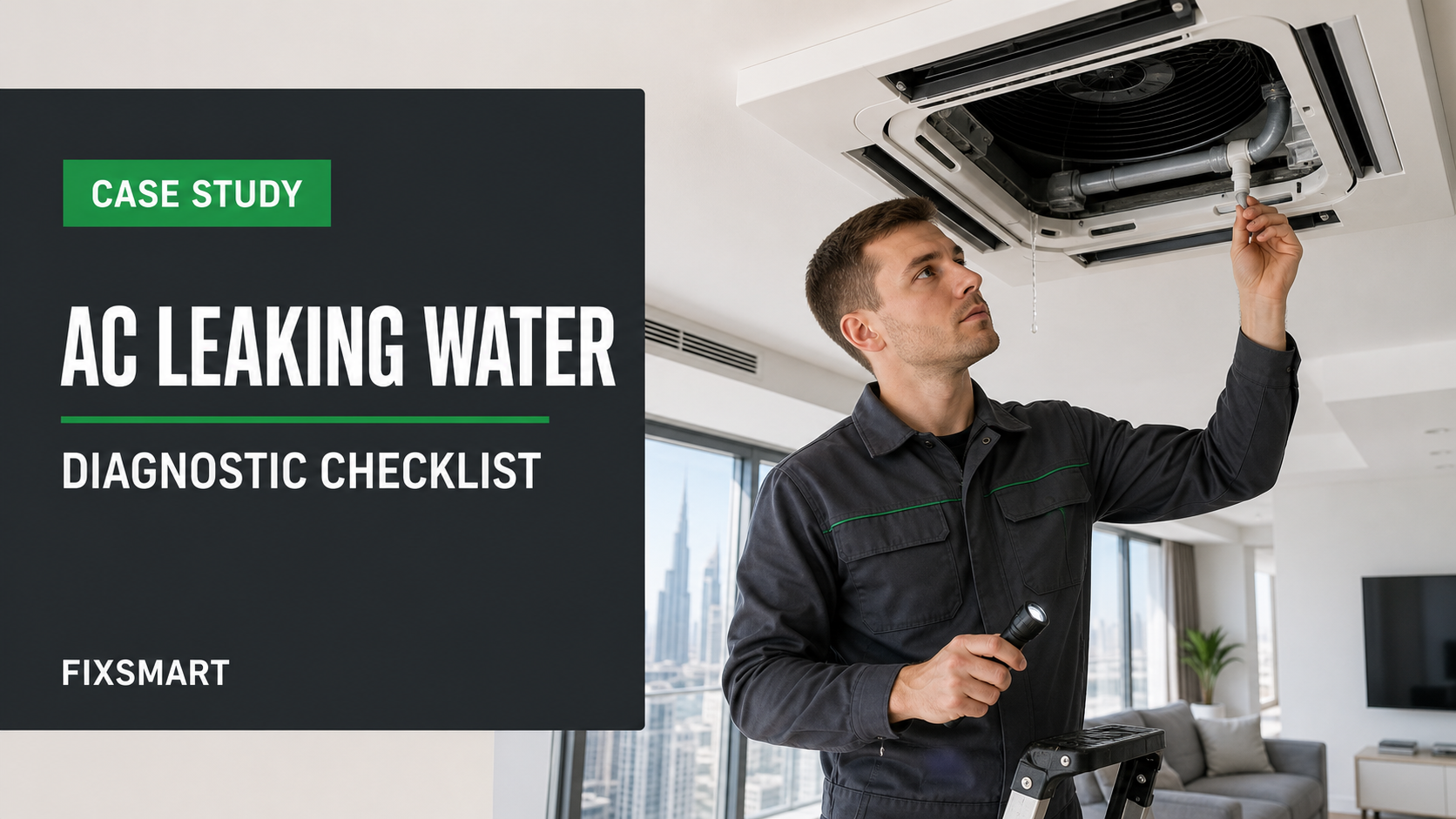
Water dripping from an indoor AC unit is a symptom, not a complete diagnosis. The safe response is to protect the area, stop the affected unit when water is close to electricity or finishes, record when the leak occurs and arrange inspection of airflow, condensate drainage, insulation and installation. This article describes a typical diagnostic case, not a specific FixSmart customer.
Initial situation
A resident reports that an indoor fan-coil unit starts dripping after 20 to 30 minutes. Cooling feels weaker than usual, the filter looks dusty and water appears near the ceiling access panel. No electrical sparking or burning smell is present.
The request should also identify the property type, Dubai area, affected AC zone, thermostat setting, recent maintenance, renovation dust and whether building management controls part of the system.
Step 1: Make the area safe
Move furniture and electronics away from the water. Do not open the unit or reach into a wet ceiling void. Stop the affected AC zone if water is near lighting, sockets or electrical components. Notify building management when the leak may affect a shared ceiling, riser or another apartment.
If electrical protection operates or water reaches a socket, use the Dubai power outage safety plan.
Step 2: Check airflow and the filter
A heavily restricted filter can reduce airflow and contribute to coil icing or poor performance, but it is not the only possible cause. A safe user check is limited to an accessible filter described by the manufacturer.
Record whether airflow is weak, the filter is visibly dirty and ice appears. Never scrape ice or run the unit continuously to 'dry it out'. Use the Dubai summer AC filter guide for basic filter checks.
Step 3: Inspect condensate drainage
A professional should inspect the drain pan, drain line, trap, slope and discharge point. Blockage, damaged connections, poor fall or a disconnected line can allow condensate to overflow. Simply removing visible water does not establish why it accumulated.
The technician should confirm that the drain flows after cleaning and that water is not returning from a shared line.
Step 4: Rule out installation and insulation faults
Condensation can also form when cold pipes, fittings or duct surfaces have damaged insulation, or when humid air reaches an uninsulated surface. A poorly levelled unit or damaged pan may direct water away from the drain.
The inspection should therefore look beyond a blocked pipe when evidence points to sweating, installation or building-envelope conditions.
Step 5: Agree on the repair before work
The quotation should state the diagnosed cause, cleaning or repair method, parts, access work, exclusions and warranty. If a ceiling must be opened, confirm who will reinstate finishes and whether building approval is required.
In a rented apartment, review who pays for repairs in a Dubai rental before non-emergency replacement work.
Verifying the result
After the repair, run the unit long enough under normal conditions to test cooling and drainage. Confirm:
- no water leaves the pan or access area;
- the drain discharges correctly;
- airflow is stable;
- no ice develops;
- ceiling and electrical areas remain dry;
- photos and service notes are provided.
A five-minute test may not reproduce a leak that previously appeared after half an hour.
Wrong approaches in this scenario
It would be a mistake to keep using the unit while water approaches electricity, assume every leak is a blocked drain, replace major parts without testing, or close the ceiling before a sustained test. A dirty filter may be relevant but does not prove the complete cause.
Posting this task on FixSmart
FixSmart is a service marketplace in Dubai. Customers post an AC symptom and receive responses from professionals in the relevant category. FixSmart helps customers find providers; the diagnosis and repair are performed by the selected professional.
Include the Dubai area, property type, affected room, time until dripping starts, cooling performance, filter condition, visible ice, water location and building access rules.
Use the professional selection checklist before confirming the job.
Frequently asked questions
Can I run the AC before the professional arrives?
Stop the affected unit when water is near electrical components or finishes. If the area is dry and risk is unclear, ask building management or a professional for instructions.
Is a blocked drain always the cause?
No. Airflow, icing, insulation, installation, drain slope, pan damage and shared drainage can create similar symptoms.
Will filter cleaning solve the leak?
Only when airflow restriction is part of the confirmed cause. The drainage system still needs to be checked.
Who approves repairs in a rental?
Check the tenancy contract and obtain the required landlord or building-management approval.
Sources and currency
This case was reviewed on 6 August 2026 using DEWA summer efficiency guidance and standard HVAC diagnostic principles. It is an educational workflow, not a remote diagnosis.
<!-- FIXSMART_SEO_ROUTE_START -->
FIXSMART service route
Use this guide as a decision point, then continue through the relevant FIXSMART route instead of leaving the article as a dead end:
- Customer route: https://fixsmart.ae/results?q=ac%20service%20dubai - compare available Dubai home-service professionals for this issue.
- Cleaning route: https://fixsmart.ae/cleaning - request home, apartment or villa cleaning support when the problem involves cleaning, move-in or hygiene work.
- Professional route: https://fixsmart.ae/find-job - apply as a service provider if you want verified FIXSMART job leads.
For urgent electrical hazards, active leaks, burning smells or unsafe access work, stop using the affected area and arrange a qualified inspection before attempting DIY repair.
<!-- FIXSMART_SEO_ROUTE_END -->